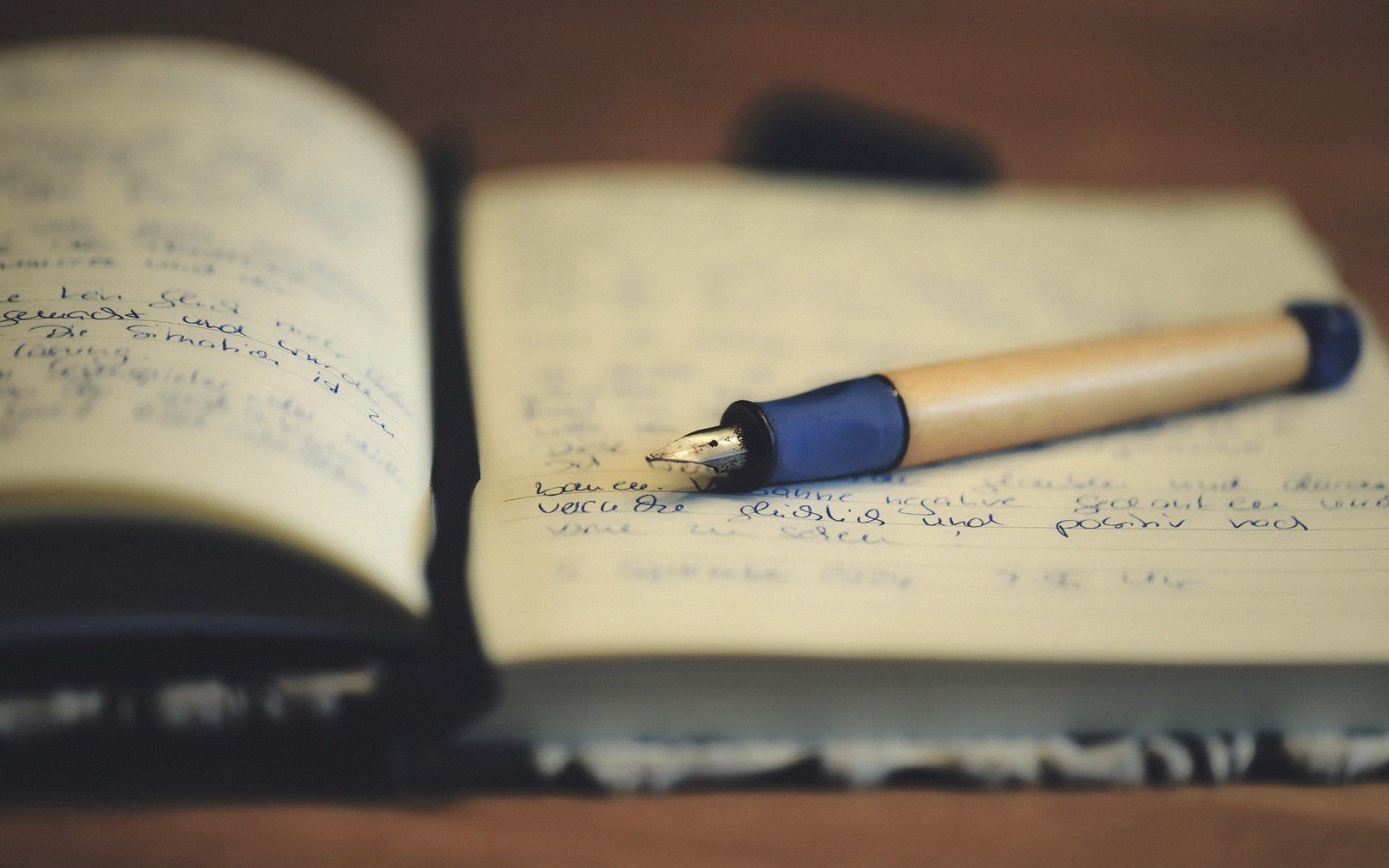
01The notebook you keep for yourself
Most writing notebooks die in the middle. Not abandoned dramatically, just quietly stopped — slid into a drawer, replaced by a new one with better intentions. The reason is almost always the same: they were never kept for rereading. They were kept for writing.
Keeping a notebook just for writing in sounds reasonable, until you think about it. Writing into a notebook without rereading it is a little like cooking a meal no one eats. The act feels productive; the result disappears. What makes a notebook durable — worth returning to months later, genuinely useful rather than just honest — is the habit of writing for your future self rather than your present one.
The practical shift is small. Instead of recording what happened or what you felt, record what you noticed and why it matters. Not I was frustrated today but the sentence I kept circling had a clause I was afraid to cut. Not beautiful light this morning but the light through the kitchen window hit at an angle that made everything look provisional — good word for the third chapter. Specificity is what holds up. Feeling evaporates; observed detail stays.
Instead of recording what happened or what you felt, record what you noticed and why it matters.
Anne Lamott, in Bird by Bird, talks about the small index cards she kept in her shirt pocket — a reminder that the unit of good notebook-keeping is close to a sentence, not a page. Stephen King, in On Writing, is even blunter about the primacy of noticing over reflecting. Neither is wrong, and both suggest the same thing: the notebook is a tool, not a confessional.
Three habits that actually work: date each entry (context rescues almost everything), read back once a month for ten minutes, and cross out whatever embarrasses you immediately — it won't survive long enough to be useful anyway.
The questions you keep in a reading journal and the ones you keep in a writing notebook are surprisingly close cousins. Both ask: what did I actually see here, and why did it stay with me?
Who comes up in this piece
Anne Lamott
Referenced author
American author of Bird by Bird, a widely read book on writing craft
Stephen King
Referenced author
American novelist, author of On Writing, a memoir and craft guide