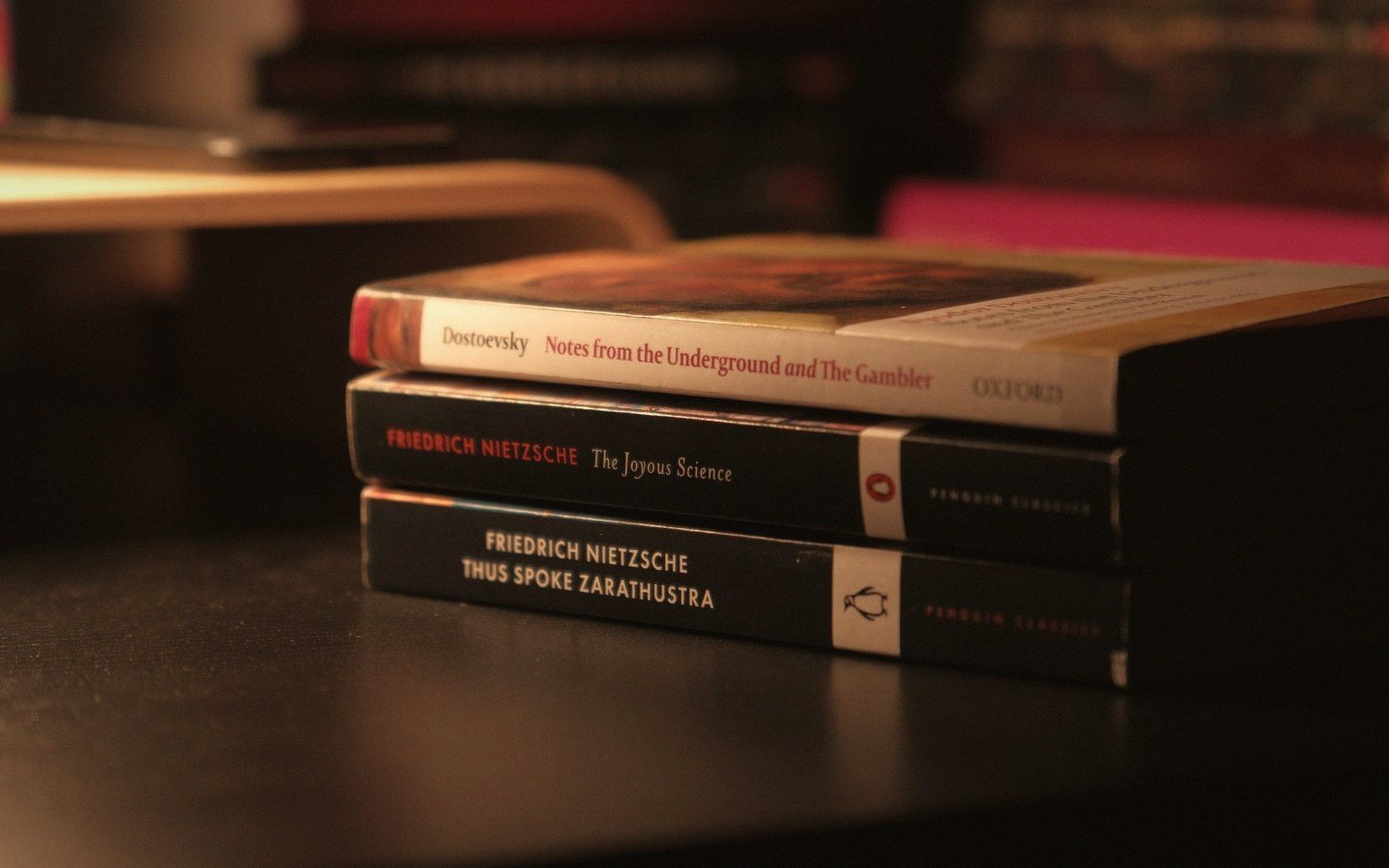
Read enough of them and the same five things keep surfacing.
01The Crowded Shelf
The writing craft book is its own small industry. Every working author of sufficient reputation eventually produces one, and readers buy them in a spirit that hovers somewhere between self-improvement and literary devotion. Some are eccentric and brilliant. Some are thinly disguised memoir. Some are neither. But read enough of them and something interesting happens: the disagreements that felt essential start to dissolve, and underneath the different voices and methods and obsessions, five pieces of advice surface again and again, in almost every serious book on the subject. Not because one author borrowed from another, but because they all arrived, by different routes, at the same bedrock.
This is an attempt to name those five things clearly — to find the signal beneath the noise.
02The Five Things
1. Read voraciously, and read like a writer.
Every craft book says this, and they are all right. Anne Lamott's Bird by Bird says it with warmth. Stephen King's On Writing says it with characteristic bluntness, treating reading and writing as inseparable activities that amount to a single practice. Kazuo Ishiguro, in the many conversations he has given about his method over the decades, returns to the same point: he learned more from reading than from any formal instruction. The advice is so consistent across temperaments — Lamott's generosity, King's impatience, Ishiguro's quiet precision — that it stops sounding like opinion and starts sounding like fact.
Reading like a writer is not the same as reading for pleasure, though the two can coexist. It means asking not just what happened but how did the author make me feel that? It means noticing the sentence that slowed you down and the one that pushed you forward, the chapter break that arrived at exactly the right moment, the character detail that landed the whole person in your mind without announcing itself. It is an active, questioning posture — which is exactly what first lines reward when you start to look at them as craft choices rather than decoration.
The apprenticeship is the reading. All the craft books agree on this.
2. A first draft is not a manuscript.
This is the second great consensus. The myth of the writer who produces clean, finished prose on the first pass is, according to virtually every person who has written seriously about writing, exactly that: a myth. Lamott gave us the phrase "shitty first drafts" — deliberately inelegant because she wanted the idea to land without apology — and her point was simple: permission to write badly the first time is not an indulgence; it is the only way the work gets done. King agrees. His On Writing is emphatic that the first draft belongs to the writer and no one else, that its job is simply to exist.
What varies between the books is what to do next. Some writers recommend a cooling-off period before the revision — weeks, sometimes months, enough distance to read what you actually wrote rather than what you intended to write. Others are more structural about it, returning immediately with a plan. But every serious craft book treats the gap between first draft and finished work not as a regrettable detour but as the central process. Revision is not repair. It is writing.
This matters especially for readers who also write, because we are trained by reading finished prose to mistake it for its first incarnation. The books exist, in part, to correct that misreading.
3. Specificity is everything.
The general is forgettable. The specific is true. Say it however you like — this principle appears in craft books with near-religious consistency. The image of "a tree" carries almost no weight; the image of "a silver birch at the far end of the garden, the bark peeling in long strips like shed skin" does something entirely different. Not because detail is decorative, but because detail is where meaning lives.
Say it however you like — this principle appears in craft books with near-religious consistency.
Richard Powers builds novels on this principle at scale. The Overstory works not because the idea of forests is moving but because each of the nine human stories it contains is rooted in a particular tree, a particular relationship, a particular set of sensory facts. Tara Westover's Educated is harrowing in part because it is so exact: the weight of a specific piece of scrap metal, the particular colour of an Idaho sky at a particular time of year. Specificity is what makes both books feel lived-in rather than observed from a distance. The craft books knew this first.
The instruction to "show, don't tell" is a simplified version of this principle, and it is oversimplified — there are times when telling is the right choice. But underlying the cliché is the real lesson: concrete and particular beats vague and general, almost without exception.
4. Write toward discomfort.
This one takes different shapes depending on who is saying it. For Lamott, it is partly psychological: the voices that tell you the work is bad, that you have nothing to say, that you should stop — she names them and instructs the writer to write past them. For King, it is more practical: write the thing that genuinely scares you, because that fear is almost always a sign you have found something real. For Ishiguro, whose narrators are often sitting with things they cannot quite bring themselves to say, the discomfort is structural — what the narrator withholds is as interesting as what they reveal.
But the consensus is clear. The comfortable material, the material that asks nothing of you, tends to produce writing that asks nothing of the reader. The discomfort is not there to be tortured, but to be listened to. It marks the edge of what you actually care about, which is usually also the edge of what is worth writing.
This does not mean confessional. Hilary Mantel wrote into enormous historical and psychological difficulty without a single page that feels like therapy. Susanna Clarke spent over a decade on Jonathan Strange & Mr Norrell, writing toward a vision that was genuinely strange and had no obvious precedent or guarantee of welcome. The discomfort they wrote toward was formal and imaginative, not personal in a narrow sense — but it was real, and you can feel it in the confidence of the finished work.
5. Sit down and write.
This is the unglamorous one, and every craft book buries it in different language — habit, routine, practice, daily word count — but they all say it. The muse is not reliable. The mood is not reliable. Inspiration arrives, when it arrives, to writers who were already working. King writes to a daily word-count target. Lamott recommends short daily assignments to keep the work moving without overwhelming yourself with the scale of what you are attempting.
What the books are all quietly arguing against is the idea of waiting. Waiting to feel ready, to have the perfect sentence, to have the time, to have the confidence. The confidence, every craft book agrees, comes from the work itself — and only from the work. You do not write because you are ready; you become ready by writing.
This is also the point where the craft books are most honest about how unglamorous good writing usually is. It is not lightning in a bottle caught on the perfect evening. It is a desk and a time of day and a habit maintained past the point of wanting to maintain it.
03Why They Agree
The craft books disagree vigorously on plenty: on plot versus character, on outline versus discovery, on how to handle dialogue, on the value of workshops, on almost everything structural. These disagreements are real and worth engaging with. But the five things above are different. They keep appearing because they are not really opinions — they are descriptions of what writing requires, arrived at independently by very different writers working in very different modes.
Which perhaps suggests something worth holding onto if you read craft books the way many readers do: hungrily, hopefully, looking for the insight that will make it all click. The insight is there. It just keeps turning out to be the same one, restated in language that suits the particular writer's character. And the reason they all say the same five things is probably the most useful thing the craft books have to offer: not that writing is mysterious, but that it is not. It is difficult in ordinary, repeatable, well-documented ways — and those difficulties have known solutions that every serious writer eventually finds.
The books are not the secret. Sitting down with something genuinely specific and genuinely uncomfortable, and staying there, is the secret. The books just help you believe it.
Who comes up in this piece
Anne Lamott
Referenced author
American author of Bird by Bird, a widely read writing craft memoir
Stephen King
Referenced author
American novelist; On Writing is his part-memoir, part-craft manual
Kazuo Ishiguro
Referenced author
British novelist, known for restrained, withholding narrative voices
Richard Powers
Referenced author
American novelist; author of The Overstory